What Does Balance Training Mean for a Dog?
A dog is constantly making small physical adjustments while moving. Standing, changing direction, navigating different surfaces, and responding to cues all require the body to maintain stability as weight shifts from one position to another.
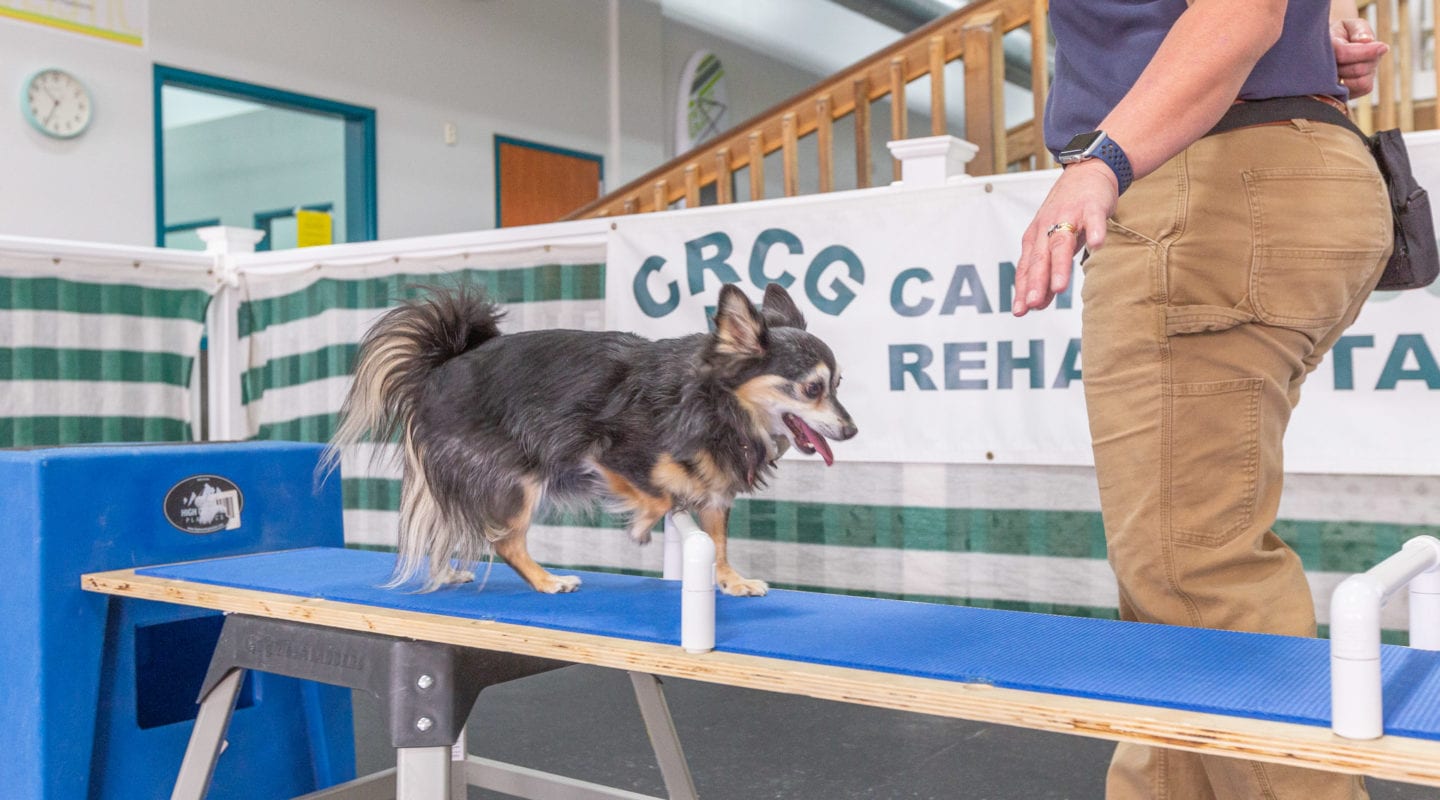
Balance training introduces structured physical challenges that build stability, coordination, and proprioception — a dog’s sense of where its body and limbs are in space. Within our TOTAL DOG Fitness approach, balance work is developed through our F.I.T. (Fitness Integrated Training) method, which pairs foundational-through-advanced training skills with tools such as FitPAWS balance equipment, alongside education that helps people better understand how their dogs experience their surroundings.
The emphasis is not on making an exercise unnecessarily difficult. A useful balance activity should be appropriate for the dog participating in it and provide an opportunity to work on physical control in a structured setting.
How Balance Connects With Body Awareness
Physical fitness involves more than strength or endurance. Dogs also need awareness of their body position as they move through and respond to their surroundings. Balance activities can create situations in which a dog must pay closer attention to stance, weight distribution, and movement.
This kind of work may involve several related elements:
- Maintaining a controlled position
- Adjusting the body when stability changes
- Coordinating movement during a physical task
- Paying attention to cues while completing an activity
- Developing skills progressively rather than rushing through them
These elements help explain why balance is relevant to broader canine fitness. The objective is not simply to keep a dog physically busy. It is to provide a more purposeful movement experience in which control and awareness matter.
Building Skills Through Progressive Fitness Work
Dogs come to fitness activities with different levels of experience. Some may already be comfortable responding to a range of training cues, while others may still be developing foundational skills. For this reason, balance work makes the most sense when it reflects what the individual dog can comfortably and appropriately do.
The TOTAL DOG program at Canine Rehabilitation & Conditioning Group teaches skills from foundation through advanced levels while incorporating balance development. This progression allows physical learning to be viewed as a process rather than a single challenge that every dog is expected to complete in the same way.
As dogs learn, the quality of the activity matters. A controlled response provides a different training experience from hurried or uncertain movement. Giving a dog an appropriate opportunity to understand a task can help keep the emphasis on learning rather than simply completing an exercise.
Balance, Body, and Bonding Work Together
Our TOTAL DOG philosophy centers on three connected ideas: Balance, Body, and Bonding. The program recognizes that dogs need balance to develop skills and that physical learning can also influence the way dogs and people work together.
That relationship is especially relevant during interactive fitness activities. Owners are not merely watching their dogs exercise. They are learning to communicate, observe responses, and better understand how their dogs perceive the environment.
As a dog works through a physical task, the person can pay attention to comfort, attention, confidence with the activity, and response to guidance. This creates an experience in which fitness and communication can occur together.
The result is a broader view of conditioning. Physical exercise remains important, while the interaction between the dog and the person also becomes part of the learning process.
Why Controlled Challenges Matter
Balance activities should challenge a dog without turning exercise into uncontrolled movement. The goal is to encourage purposeful physical responses that suit the activity and the dog performing it.
FitPAWS equipment provides one way our TOTAL DOG program incorporates balance challenges. The appropriate approach to balance work depends on the individual circumstances and needs of the dog. A healthy dog participating in fitness activities is different from a dog experiencing pain, recovering after surgery, or living with a neurologic or other physical condition.
For dogs with medical or mobility concerns, fitness training should not be treated as a replacement for appropriate veterinary evaluation or clinical rehabilitation. Our clinical rehabilitation services address dogs with needs that can include post-operative recovery, injury, neurologic conditions, age-related changes, and other physical limitations. Balance exercises may also be incorporated into rehabilitation when appropriate to an individual patient’s needs, while clinical rehabilitation and general fitness serve different purposes.
CRCG’s neurological rehabilitation information explains that balance exercises may help address weakness and support functional activities. Rehabilitation recommendations are based on the patient’s signs and symptoms, neurological evaluation, and realistic goals established by guardians and therapists.
Making Fitness Meaningful for the Individual Dog
A productive fitness experience begins with recognizing that the activity needs to make sense for the dog in front of you. Physical ability is only part of that picture. A dog’s familiarity with training, response to the environment, and understanding of a task can also shape how it participates.
This is one reason balance training and skill development complement each other. A dog may need to understand what is being requested before it can perform a physical task in a controlled way. Likewise, the person working with the dog benefits from recognizing how the animal interprets cues and surroundings.
TOTAL DOG specifically incorporates education to help owners understand their dogs’ interactions with their surroundings, alongside physical skill and balance development. That approach helps place the exercise within a larger learning experience rather than treating fitness as a series of isolated movements.
Where Balance Fits Within Overall Canine Fitness
Balance is one part of physical conditioning, not a substitute for every other type of activity. A well-considered approach to canine fitness looks at the purpose of an activity and what the dog is being asked to do.
Balance-focused work can complement activities that develop other physical skills because it places particular attention on stability, coordination, and controlled movement. It can also make owners more observant of how their dogs approach physical tasks.
For dogs without clinical concerns, this can provide another way to add purposeful variety to their physical activity routine. When a dog has an injury, medical condition, significant mobility limitation, or is recovering from surgery, owners should seek appropriate professional guidance before introducing new physical challenges. Our services include both canine fitness opportunities through TOTAL DOG and separate clinical rehabilitation services for dogs with rehabilitation needs.
Learning Together Through Balance Training
At Canine Rehabilitation & Conditioning Group, we view canine fitness as an opportunity to develop more than physical ability. Through TOTAL DOG, balance development is combined with training skills and a greater understanding of how dogs interact with their environment. The program’s Balance, Body, and Bonding framework reflects the connection between purposeful movement, learning, and the relationship people build with their dogs.
Balance training does not need to be about completing the hardest possible exercise. It can instead be about helping a dog engage thoughtfully with an appropriate physical challenge while the person learns how to guide, observe, and communicate more effectively.
Interested in adding purposeful balance work to your dog’s fitness routine? Contact us today to learn more about TOTAL DOG balance-focused training and whether it is an appropriate fit for your dog.